Gems July Newsletter 2026
Bilingual Learning in the Early Years
Gems Early Learning Newsletter July 2026 | By Kayleigh Simons
Gems philosophy on Bi/multilingualism
Across our three centres at Gems we have the privilege of working with tamariki and whānau from all over the world who speak many different languages as well as bilingual New Zealanders who speak te reo Māori and NZSL. Our tamariki may come from homes where no English has been spoken before now, they may speak a little English as well as other languages or English might be the predominant language. Either way Gems values the rich linguistic variety of our tamariki and whānau. At Gems, we teach predominantly in the universal language of play, meaning every child will have the opportunity to communicate, participate and shine.
What does it mean to be Bilingual?
- Bilingual means being exposed to more than one language regularly.
- Children don't need to speak both languages perfectly to be bilingual.
- Some children may understand more than they can speak in one or more language.
English Medium Learning
Many families choose an English-medium early childhood setting because they would like their child to develop English skills before starting school. This can be especially important when English is not the primary language spoken at home.
Learning English in ECE does not mean a child needs to stop using their home language. In fact, maintaining the home language provides a strong foundation for learning additional languages.
How does Bilingual Learning Happen?
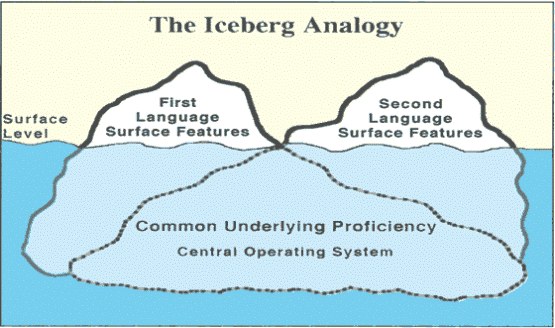
An easy way to think of bilingual learning is like an iceberg: while your child's languages may look completely separate on the surface, they are powered by the same deep, invisible foundation of thinking skills and concepts. This means skills developed in one language support learning in the other!
There is no "right way" to raise a bilingual child
Families use many different approaches depending on their circumstances, languages, and goals:
One Parent, One Language
- One parent consistently speaks one language.
- The other parent speaks a different language.
- For example, Mum speaks Mandarin and Dad speaks English.
Home Language at Home
- The family speaks their heritage or home language at home.
- Children learn English through preschool, school, and the wider community.
- This is one of the most common approaches in New Zealand.
Time and Place Approach
- Different languages are used in different settings.
- For example, Samoan at church and with grandparents, English at preschool.
Remember: Successful bilingualism is not about following a perfect system. The most important thing is that children experience rich, meaningful communication with the people who care for them. At our centres, we support whichever approach works best for your family and encourage children to maintain strong connections with their home language and culture while developing English.
Myth Busting
Myth: Learning two languages confuses children.
Fact: Children are capable of learning multiple languages from a very young age.
Myth: Children should stop speaking their home language to learn English faster.
Fact: Continuing to use the home language supports overall language development.
Myth: Bilingual children are academically behind.
Fact: Research shows bilingual children perform as well as or better than monolingual peers over time and often demonstrate strengths in problem-solving, attention, and cognitive flexibility.
Myth: Mixing languages means a child is confused.
Fact: Language mixing is a normal and expected part of bilingual development.
How Teachers Support Bilingual Learners at Our Centres
- Learning key words and phrases from children's home languages.
- Using visual supports and gestures.
- Building strong relationships with whānau.
- Encouraging children to use all their languages.
- Including books, songs, and cultural resources from diverse backgrounds.
How Families Can Help at Home
- Continue speaking your strongest language at home in some form.
- Read books and tell stories in your home language.
- Sing songs and share family traditions.
- Talk often with your child about everyday experiences.
- Let children hear and use both languages naturally.
A Final Thought
Every language spoken by our tamariki is a treasure. By valuing and supporting children's home languages alongside English, we help them develop strong identities, meaningful connections, and lifelong learning foundations.
Ready to enrol
We look forward to having you join, start your enrolment online today

Read More
Lorem ipsum dolor sit amet, consectetur adipiscing elit.
Find a gems centre
for you and your child
Each of our three centres offers the same high standard of Gems care and curriculum, with thoughtful variations to suit your preferences and budget.